
content
For years, a catalog was built for two readers. The person who browses and buys, and Googlebot, which indexes and ranks. Two readers, clear rules, decades of accumulated practice.
Now there’s a third reader, and it behaves unlike either of them. It doesn’t scroll your page or assign it a position in the results. It reads the page to pull out a fact and retell it to someone else in its own words. When a person asks Perplexity “which moisturizer works for sensitive skin without fragrance,” the answer gets assembled from somebody’s pages. Yours, or your competitors’.
We’re opening this series on the Advantrise blog with a look at how an eCommerce catalog survives in the age of AI search. Today the organic side: how to get AI systems to cite your pages specifically, which is to say Generative Engine Optimization (GEO). The next article in the series takes on the paid side, where the logic is different and in places more unsettling.
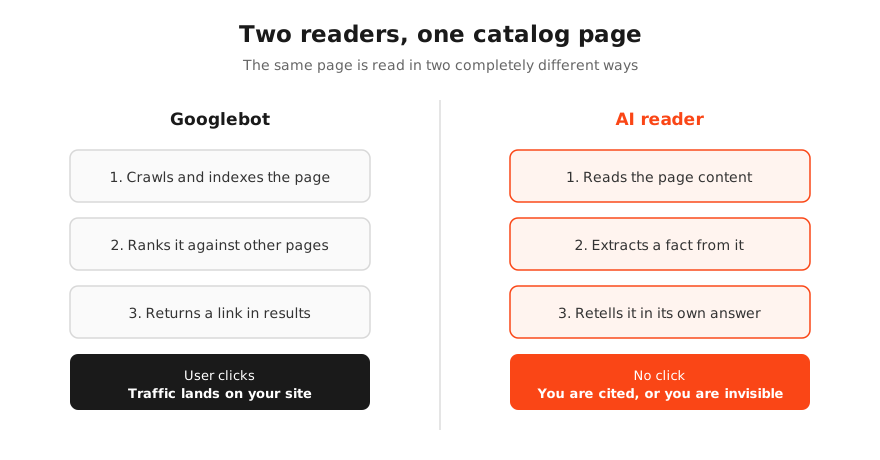
How an AI reader differs from Googlebot
The difference isn’t cosmetic. Googlebot indexes a page, evaluates it, and decides what position to show the link at. The user sees a list, clicks, lands on the site. The classic funnel everyone is used to.
An AI system works differently. It reads the page, pulls a fact out of it, and drops that fact into its own answer, often with no link at all and almost always without a click. The user gets a finished answer and goes nowhere. The page did its job, and there was no traffic.
That changes the metric of success. In classic SEO the main question was “what position am I in.” In GEO the question is different. Has my page become the source for an answer? These aren’t the same thing. A page can sit at position eight in Google and still be the only source Perplexity quoted in its answer. Or the reverse: rank at the top of organic results and never make it into a single AI answer, because there’s nothing in it to extract.
Why bother at all
Here’s a fair objection. If AI retells the answer and the person clicks nowhere, what’s the point of becoming the source of a quote. No traffic, no money, why spend the effort.
First, citation shapes the short-list before comparison even starts. When a person asks AI “which brands make moisturizers for sensitive skin,” they get a list of three to five names. You’re either on that list, or you don’t exist for that shopper. Next they’ll go compare the brands already named, and your absence at this stage means you dropped out of the race before it began. This isn’t about a click today. It’s about making it into consideration at all.
Second, clicks don’t disappear entirely, they become selective. A person reads the general answer, but goes to the site for specifics. Exact price, whether their size is in stock, shipping terms, photos from every angle. AI gives the overview, the site closes the sale. Building the kind of catalog pages that work both for AI citation and for conversion is exactly what eCommerce SEO focuses on in 2026. So part of the traffic stays, it’s just warmer now, because the person arrives already intending something.
Third, it’s a zero-sum game against competitors. If AI doesn’t cite you, it cites someone. Every answer that names a competitor instead of you is a small loss of market share you won’t even see in analytics, because it happened inside someone else’s interface. Invisible, but real.
So GEO isn’t about traffic in the old sense. It’s about presence in the layer where part of the buying decision now gets made. Below is how to get there.
What an AI system actually sees on a catalog page
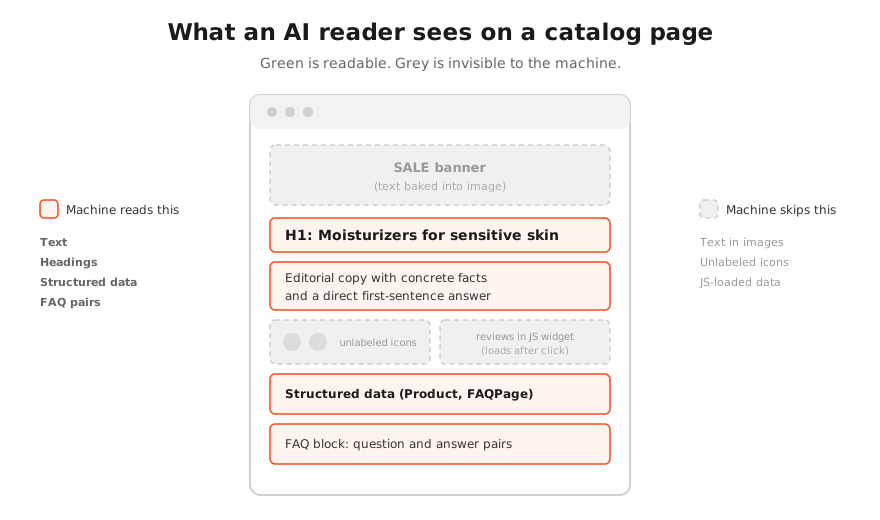
What a person sees on a page and what an AI pulls from it differ dramatically.
Picture a typical “face moisturizers” category page. The person sees a grid of forty products, nice photos, prices, buttons, a promo banner. Looks full. To an AI system that page is nearly empty if all the meaning is baked into images and buttons. The machine skips whole layers of what seems obvious to a human:
- Text on a banner image. The promotion, the terms, the main message, all painted onto an image. To a person it’s the most prominent thing on the page. To a machine it doesn’t exist.
- Unlabeled icons. A free-shipping or warranty badge is clear to a person at a glance. The machine sees a picture with no meaning attached.
- Data in a JS widget. Specs, reviews, price that load after a click or scroll. If the content only appears after a user action, for some parsers it isn’t there.
AI parses text, structured data, and headings. Everything else is either noise or emptiness to it.
One example from our work that illustrates this well. A store selling birdwatching gear (yes, birdwatching is a whole industry with a fiercely devoted audience and an average order value that would surprise you) had a “binoculars for beginners” category page. Nice page, product grid, filters by magnification and price. Zero text. When the team checked how Perplexity answered “which binoculars should a beginner pick for birdwatching,” the answer cited three competitor blogs and not one store. The store had the perfect product sitting right there on the page, but the page said nothing that could be quoted.
From this comes a simple check before any complex optimization. Is there text on the page that contains facts, and can those facts be extracted without running JavaScript.
When the bot shows up but gets confused
There’s another problem, separate from empty pages. Sometimes a page has text, product, and meaning, and the bot still doesn’t understand what to do with it. The cause isn’t the content. It’s how the site around the page is built.
The most common culprit is duplicates with no redirect. One product is reachable at three different addresses, because that’s how it grew historically, an old address, a new address, an address with a filter parameter. None of them redirects to the main version. The bot sees three pages with identical content and doesn’t know which one to treat as real. The signal splits three ways instead of concentrating on one. An AI system reading this site runs into the same confusion over which of the three duplicates to cite.
The second common problem is deleted pages with no redirect. A product is discontinued, the page is removed, it returns a 404, but links to it still live inside the site and in the index. The bot walks dead addresses, spends resource on them, and draws a conclusion about the site’s general sloppiness. Every such page is a small signal that nobody’s minding the housekeeping.
Indexing logic deserves its own untangling, because this is where a lot of stores have a mess. There are two opposite kinds of problem pages, and they get confused with each other.
The first kind is important pages that for some reason aren’t in the index. They have traffic, they have demand, but Google hasn’t indexed them, most often because of weak internal linking or because the bot rarely reaches them. These need rescuing: add links, check accessibility, request indexing manually. How internal linking works, and why the bot finds some pages easily and others not at all, we covered in detail in the piece on internal linking for eCommerce.
The second kind is the opposite. Unwanted pages that shouldn’t be in the index but creep in anyway. Filter duplicate pages, technical pages, old versions. These need to be deliberately kept out of the index, otherwise they breed duplicates and pull the bot’s attention away from the pages that actually matter.
A simple rule to keep it straight. Important pages with demand belong in the index and well linked, while everything technical and duplicated should either be collapsed to one version with a redirect or honestly closed off from indexing. The grey zone between those two states is exactly where visibility gets lost.
Structured data: the language you speak to the machine
Text on the page is what AI can read. Structured data is what AI understands without guessing.
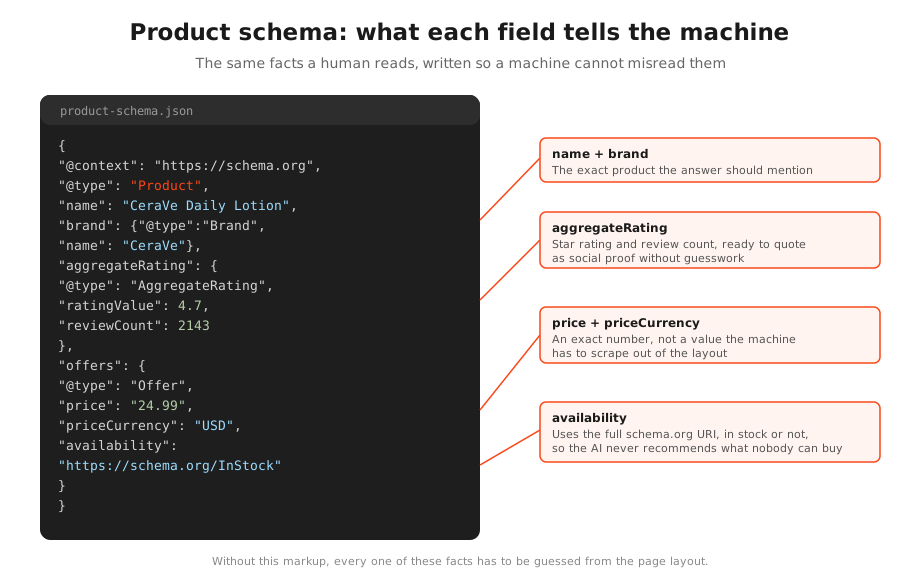
Schema.org markup turns “there’s a number 24.99 written somewhere on the page” into “this product’s price equals 24.99 dollars.” The first has to be interpreted. The second is already unambiguous. For a machine the difference is enormous, because it doesn’t enjoy interpreting, it enjoys ready-made facts.
eCommerce has several key markup types, but the place to start is the two most important for citation, Product and FAQPage.
Product schema describes a product in a language any machine understands, covering name, price, availability, rating, and brand. When AI gets a query about a specific product, it favors pages where this data is marked up over pages where the same thing has to be guessed from the layout.
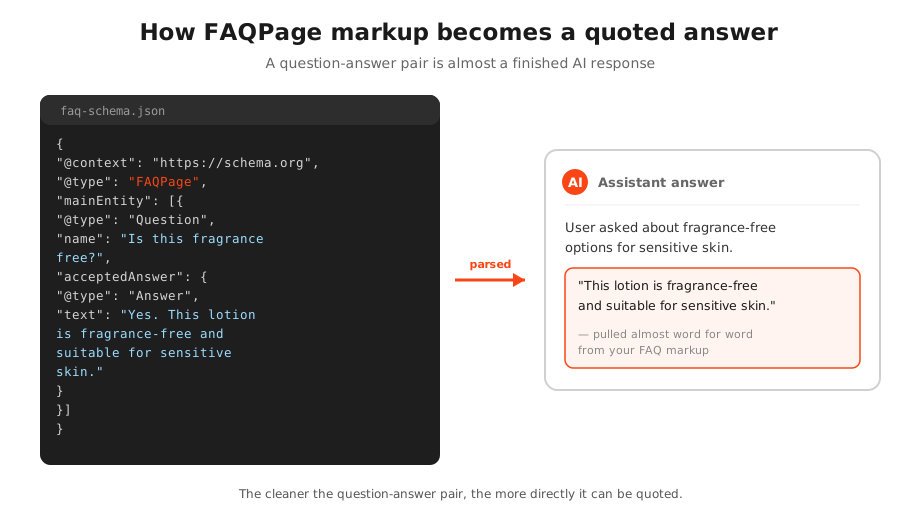
FAQPage schema works for citation better than almost anything else. AI systems love question-answer pairs, because they’re nearly a finished answer for the user. If a category page has an FAQ block marked up with FAQPage, you’re essentially handing AI a ready-made chunk it can drop into an answer without rework.
The rest of the types are useful too, listed here without code because the principle is the same. AggregateRating passes along the rating and review count. Offer specifies sale terms, price, currency, availability. BreadcrumbList shows the machine the catalog structure, where this page lives. Each one gives the machine a little more certainty instead of guesswork.
One thing here gets confused often. The product feed for Merchant Center and structured data on the page are different things, and you need both. The feed feeds Google’s ad and shopping systems. Schema on the page feeds everything else, including AI citation and organic AI Overviews. A store with a perfect feed and a bare page with no markup has closed only half the task.
Entity answers: how to write so you get cited
Markup is the foundation. But AI also cites plain text, if it’s written right. And this is where most eCommerce copy loses, because it’s written for a human reader, not a machine one.
The main principle is called the entity answer. Sounds complex, works simply. For every important question, give a direct answer in one or two sentences first, and only then expand into detail.
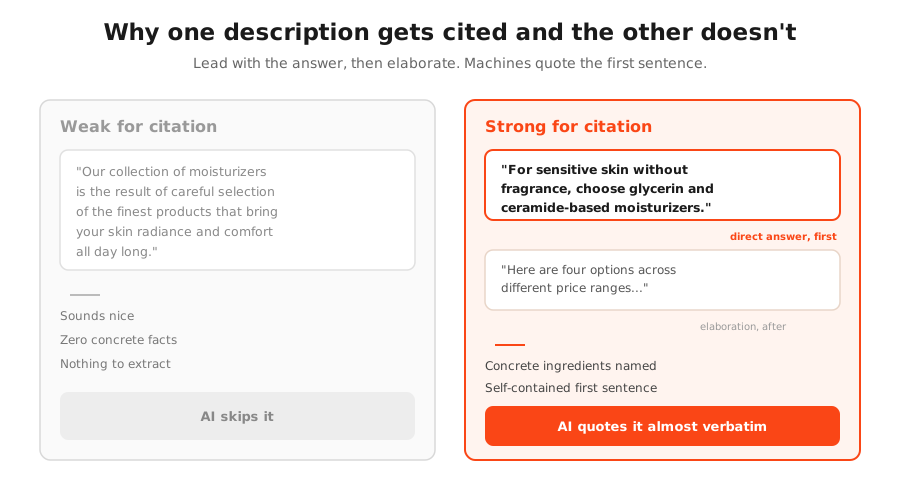
Compare the two. Here’s a description that’s weak for citation. “Our collection of moisturizers is the result of a careful selection of the finest products that bring your skin radiance and comfort all day long.” Sounds nice, zero facts, nothing to quote.
Here’s one that’s strong for citation. “For sensitive skin without fragrance, choose glycerin and ceramide-based moisturizers, free of alcohol and added scent. Here are four options across different price ranges.” The first sentence is a ready answer AI can drop in almost verbatim. The expansion comes after.
A few concrete techniques that make text extractable:
- Self-contained statements. A sentence you can lift out of context and it stays true and clear. AI often takes a single sentence, so every important sentence has to stand on its own.
- Term definitions at first mention. If you mention “SPF protection factor,” give a one-sentence explanation. The machine parses definitions to answer “what is” questions.
- Concrete numbers instead of adjectives. Not “long-lasting protection,” but “protection for up to eight hours.” Not “high concentration,” but “15 percent vitamin C concentration.”
- FAQ blocks for real questions. Not invented “why choose us” entries, but actual questions people ask about this product category.
Catalog and filters: the eCommerce specifics general GEO guides skip
Most GEO advice is written for blogs and informational sites. eCommerce has its own specifics that almost nobody talks about, and that’s exactly where the advantage is.
The first thing is filtered pages as ready answers to the long tail. The query “moisturizer for sensitive skin without fragrance under 30 dollars” is essentially already a filter in your catalog, combining category, skin type, no fragrance, and a price range. If that filtered page is indexed and has at least some text, it becomes an ideal candidate for AI citation, because it answers the specific query precisely. The problem is that most stores either close all filters off from indexing or leave them bare with no text at all.
The second thing is the category as a topic hub. AI systems, like Google, judge not the single page but how fully the site covers a topic. A category with editorial copy that links to subcategories and relevant content looks to the machine like an authoritative source on the topic. This is the same logic we covered in the piece on the hub-and-spoke model for eCommerce, except now it works for a machine reader too.
The practical balance is this. You don’t need to index every possible filter combination, that creates thousands of thin duplicates. You need to pick filtered pages with real search demand, give them unique text and markup, and put those forward for citation. Leave the rest technically accessible but not a priority.
What to measure to know if it’s working
GEO has one inconvenient trait. The result is harder to measure than a position in Google. But there are ways, and they don’t require expensive tools:
- Manual checking. Take ten queries your pages should answer and put them into Perplexity, ChatGPT, and Google AI Mode. See whether your brand gets cited, or competitors. It’s crude, but it’s the most honest picture of what a real user sees.
- Referral traffic from AI sources in GA4. Visits from Perplexity, ChatGPT, and other AI systems already show up in analytics as separate sources. There isn’t much of that traffic yet in most niches, but the trend shows the direction: growing or flat.
- Google Search Console and appearance in AI Overviews. Google is gradually surfacing when your page makes it into AI-generated answers. An indirect but useful signal.
None of the three gives perfect accuracy. Together they give enough of a picture to know whether you’re moving or not.
Frequently asked questions about GEO for eCommerce
A few questions we get asked most often when the topic turns to AI citation. This block, by the way, is written exactly the way the whole article recommends: direct question, direct answer.
Will AI citation replace ordinary SEO?
No. AI citation is an extra layer on top of SEO, not a replacement. A page Google understands well is usually one AI understands well too, because the foundation is the same signals, clean text, structure, and markup. GEO is emphasis on top of good SEO, not a separate discipline instead of it.
How long until results show?
Mostly a few weeks before the first changes in how AI systems cite the site, because they need to re-read the updated pages. Slower than instant, but faster than the classic position climb, which can take months.
Do we need separate content for AI?
No, separate content for AI is a common mistake. The same text should work for both a human and a machine. If you write separate “for AI” copy, you’re either duplicating content or creating pages that are unpleasant for a person to read.
Will GEO help if we’re a small store?
Yes, and often more than for big ones. In a narrow niche there’s less competition for citation, so a well-marked-up page with concrete facts can become the source for an AI answer faster than in an oversaturated category.
Where to start this quarter
GEO for a catalog isn’t a new separate discipline to learn from scratch. It’s an extension of good SEO with a few accents for the machine reader. The good part is that most of the work overlaps, since clean text, structured data, and logical structure all work for a human, for Googlebot, and for AI all at once.

A concrete plan for the quarter looks like this:
- Clear up the technical confusion: collapse duplicates to one version with redirects, add redirects from deleted pages, confirm that important pages with traffic are actually in the index.
- Add Product and FAQPage markup to key category and product pages.
- Rewrite category editorial copy so the first sentence is a direct answer, not a marketing intro.
- Pick a few filtered pages with real demand and give them unique text.
- Check manually whether AI systems cite you on ten target queries, and record the starting point so you have something to compare against in a quarter.
This is concrete, finite work you can see results from within a quarter.
Now for what we deliberately left untouched in this article. Everything above was about organic, where AI reads your page to retell it in an answer. But there’s another arena, where AI reads the same catalog with an entirely different purpose. In paid campaigns, Google now decides which of your pages to send ad traffic to, reading the whole catalog and picking the destination without your confirmation. And there the same bare page with no text creates not a missed opportunity but wasted budget. That’s the second article in the series.
If you want your catalog ready both for organic citation and for what comes next, the Advantrise team will run a visibility audit and show you where you’re losing the most.
Subscribe to our newsletter