content
Many ecommerce stores have an odd inconsistency: the same product is described differently depending on where a customer encounters it. In Shopping ads, the title is assembled from feed attributes. In PPC search ads, a copywriter aims to sound “persuasive.” And in organic search, the snippet operates on its own terms. For shoppers, this looks like conflicting promises from the same brand. For algorithms, it’s worse: relevance gets diluted, CTR drops, and you start adjusting bids when the actual problem has nothing to do with bids.
This kind of fragmentation is easy to miss because it doesn’t break anything in an obvious way. But it quietly erodes performance: you pay more per click, lose organic clicks where the snippet undersells the page, and undermine first-impression trust — because the words in your ad and the words on your page don’t match.
The fix sounds simpler than it is: create one unified “product language” and carry it consistently across three zones — feed, PPC, and SEO. Not starting from scratch, but aligning what’s already working. This kind of cross-channel consistency is one of the practical foundations of eCommerce SEO – when your organic snippets and your product feed speak the same language, clicks and conversions improve without touching bids.
Your Feed Is More Than a Shopping Table
Most merchants treat the Merchant Center feed as a technical file for Google Shopping. In practice, it’s your primary product dictionary: how you name products, which attributes come first, how you describe variants, how you set categories. That dictionary affects impressions, query matching, click-through rates, and even whether a product gets flagged or disapproved.
When the feed is messy, PPC compensates with creative workarounds, and SEO tries to rescue CTR with louder Titles. You end up with three separate logics competing with each other instead of reinforcing each other.
So the first principle: the feed is your source of truth. PPC and SEO can add context, but they shouldn’t diverge from the core product language the feed establishes.
PPC as a Message Lab
PPC gives you something neither SEO nor the feed can: real market feedback in numbers. Not “this sounds better, I think” — actual CTR, conversion rate, and revenue per click. If a message consistently wins, you have evidence it’s clear and relevant to real buyers.
Picking winners, though, requires care. Optimizing for CTR alone can push you toward clickbait. Optimizing for conversion alone may surface messages that only resonate with a narrow segment. The better approach: look at the combination of CTR and conversion rate, then check whether irrelevant queries are growing in your search terms report.
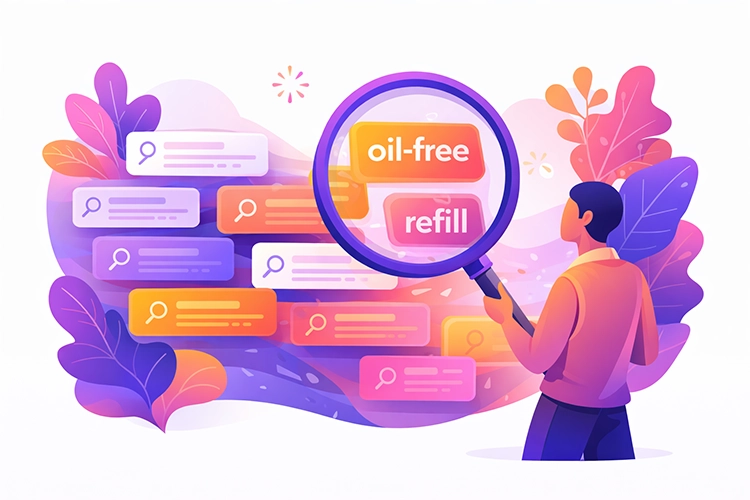
What to pull from PPC as raw material for SEO and feed updates: your best-performing RSA headlines and descriptions, recurring modifiers in search terms (things like “for sensitive skin,” “oil-free,” “refill”), and objection-reducing language around shipping, returns, availability, authenticity, and warranty.
The Bridge: Carrying Winning Copy into SEO Snippets
If a phrase lifted CTR and conversions in PPC, it will often lift CTR in organic — but only under two conditions. First: the phrase needs to match the page’s intent. Second: the page needs to back up the promise above the fold. If your Title says “Fast delivery” but that information is buried in the footer, you’ll get a short-lived CTR bump followed by a conversion drop.
What transfers well isn’t ad copy’s tone — it’s a clear value statement. Instead of the generic “Best skincare,” try “Vitamin C serums for dull skin” or “BB cream with high coverage.” That reads as useful information, not a pitch.
Message Map: The Simple Framework That Keeps Everything Aligned
To avoid turning message alignment into an endless brainstorm, a simple message map helps. It has three layers.
Layer 1: the brand promise — addresses baseline trust concerns (authenticity, shipping, returns, support). Layer 2: category intent — answers “what is this and who is it for.” Layer 3: product differentiator — explains why this specific option (size, formula, compatibility, shade, contents).
The feed typically handles layers 2 and 3. PPC can reinforce layer 1 and test messaging for layer 2. The SEO snippet should compress layer 2 plus one strong element from layer 1 — if the page genuinely supports that claim.

Feed Titles That Work for Both Shopping and Organic
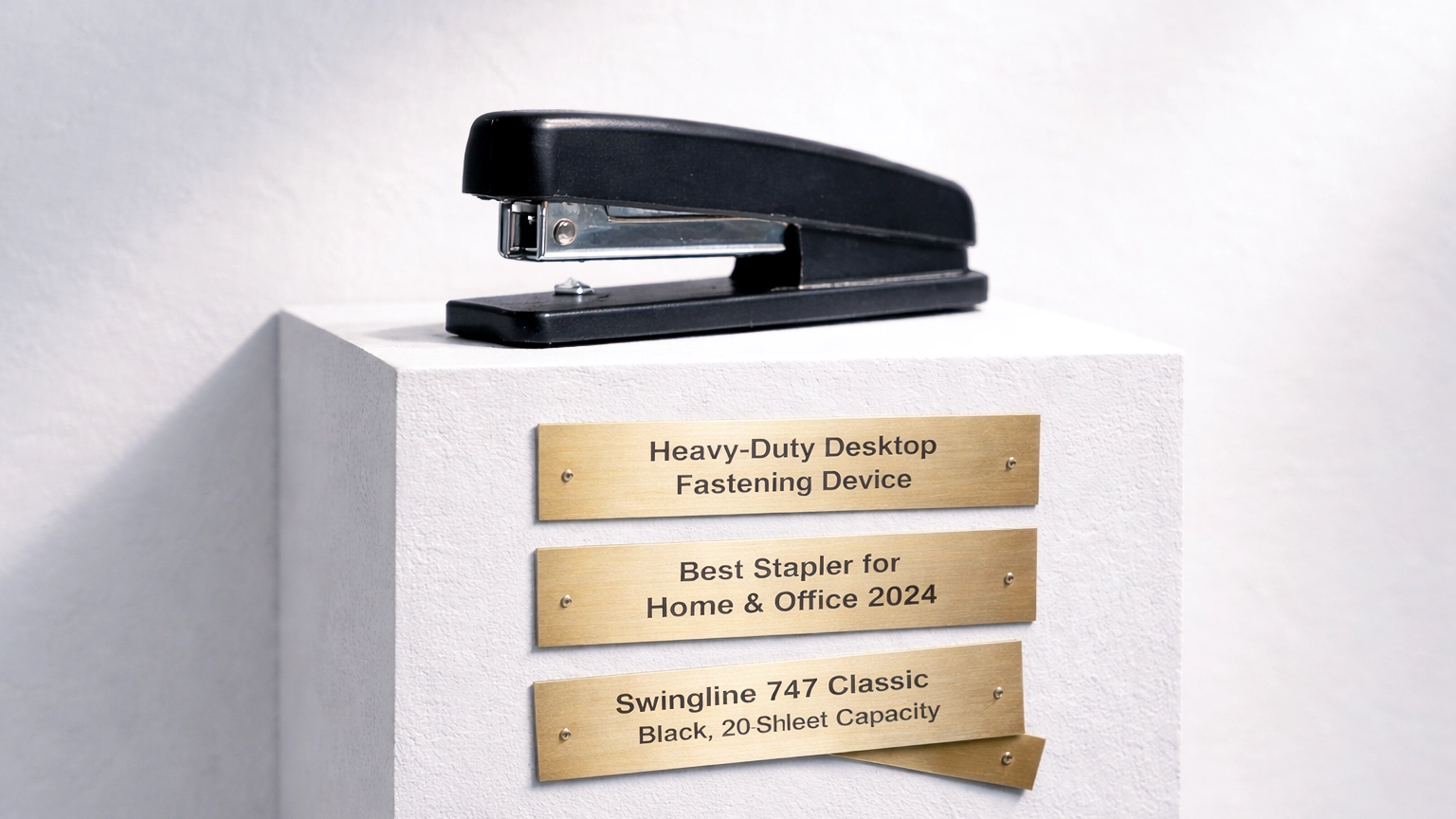
The most common feed mistake: treating the product title as a dumping ground. “Best,” “new,” “sale,” “top,” “limited,” a pile of keywords — and the first 50 characters carry no real meaning. Those first characters are usually what determines whether someone clicks.
A reliable title structure for most categories: Brand + Product type + Key attribute + Variant. Add the variant (size, shade) only when it genuinely helps users choose, or when different variants have separate pages or listings. Marketing adjectives that don’t add specificity belong in PPC creative, not in the feed.
One thing that often gets overlooked: consistent structure across the entire category. If you sell 30 serums, they should all follow the same naming pattern. Otherwise, algorithms struggle to distinguish what’s a “product type” from what’s an “attribute” — and both your ads and organic listings start getting confused alongside you.
Updating SEO Titles and Meta Descriptions
A snippet has two jobs: signal relevance and reduce hesitation. For the Title, that means: primary intent + one specific qualifier. For the Meta description: concise value statement + proof point (availability, shipping, returns) + a soft CTA.
One rule worth keeping: don’t put time-sensitive promotions in your snippets. Seasonal discounts belong on the page and in PPC. SEO copy should stay stable — otherwise you’ll either forget to update it or spend your time chasing a calendar instead of building a system.
When porting a message from PPC, check one more thing: does this phrase rely on ad extensions for context (like a shipping sitelink)? In organic, that context disappears. The phrase has to stand on its own.
Data Sources and Where to Apply Them
| Source | What it tells you | Where to apply |
|---|---|---|
| Google Ads RSA (top headlines/descriptions) | Which messages actually drive CTR and sales | SEO Title/Meta, category page headers, feed titles for top SKUs |
| Google Ads search terms | The modifiers and intents buyers actually use | H1/category copy, filters, product_type in feed |
| Merchant Center item performance | SKUs with high impressions and weak CTR | Priority list of 20 SKUs to fix in feed and on PDP |
| Merchant Center diagnostics | What’s blocking or degrading impressions (warnings/disapprovals) | Feed hygiene: pricing, availability, GTIN, images, shipping |
| Search Console (queries and pages) | Where you have impressions but underperform on clicks, and which queries map to each page | Snippet updates, title refinements, relevance checks |
A 30–60 Minute Weekly Process
This works when it’s short and consistent. Not a quarterly rewrite — a weekly habit of fixing the most visible places where your store loses clicks to imprecise copy.
The working cycle:
- Pull the 5–10 best-performing RSA phrases from the past week (by combined CTR and conversion rate).
- Review search terms and note 3–5 recurring intent modifiers.
- Identify 20 SKUs with high impressions and low CTR in Shopping — start there.
- Update feed titles using a consistent template, not everything at once.
- Update SEO Title/Meta for 3–5 pages (category or PDP) where GSC shows impressions but CTR is underperforming.
- Log the date of changes and review performance after 7–14 days, not the next morning.

Before and After: A Worked Example
A hypothetical illustration of how “one product language” looks across channels. Not a real case or a performance guarantee — just the mechanics made visible.
| Element | Before | After (aligned) |
|---|---|---|
| Feed title | Vitamin C Serum 30ml Brightening | BrandX Vitamin C Serum 30ml, Brightening, Dull Skin |
| Top PPC headline | Vitamin C Serum for Dull Skin | BrandX Vitamin C Serum 30ml for Dull Skin |
| PDP SEO Title | Vitamin C Serum 30ml | BrandX Vitamin C Serum 30ml: Brightening for Dull Skin |
| PDP Meta description | Generic description with no specifics | Brightening vitamin C serum for dull skin. In stock, fast delivery, easy returns. |
Tracking What Actually Moves
Keep measurement simple. The goal isn’t to work out perfect attribution — it’s to see whether message alignment is visibly lifting clicks and improving traffic quality.
In PPC, track CTR, conversion rate, and conversion value week over week. In Shopping, watch item-level CTR and impressions for the specific SKUs you edited. In SEO, the clearest signal is CTR in Search Console for the pages and queries that already had impressions. If CTR goes up and conversion holds, you’re moving in the right direction.
Resist the urge to judge results in 24 hours. Give the data at least a week — ideally two.
Mistakes That Undercut the Results
Changing everything at once is the first and most common mistake. When you rewrite the feed, page titles, and ads simultaneously, you won’t know what worked — and you won’t be able to scale the process.
The second trap is over-promising. If your Title and Meta mention “fast delivery,” “easy returns,” and “in stock,” those claims need to be clearly visible on the page — not buried three scrolls down.
On the feed side: don’t try to make product titles keyword-heavy. The feed is about clarity, not a keyword encyclopedia. One precise attribute in the right place beats ten words that eat up your first 50 characters.
Finally — variant confusion. Incorrect variant titles (size/color) often hurt relevance in both ads and organic. Structure variants around how people actually choose products, not around your internal SKU codes.
Bottom Line
The most straightforward way to improve ecommerce performance without additional budget is to remove the contradictions in your copy. The feed sets the baseline — what the product is and how it’s described. PPC tests which language the market responds to. SEO picks up those signals in snippets and recovers the clicks you’ve already earned through impressions.
When your store speaks one language, you stop patching a messaging problem with higher bids and start running an actual system. Most of the changes described here don’t require extra budget or a larger team — just consistency and a willingness to act on what the data shows.
Need help aligning your feed, PPC, and SEO at the process and execution level? Reach out to Advantrise
Subscribe to our newsletter