

Kitchen Cabinet Retailer
A Google Ads strategy built around markets, products, buyer types, and sales feedback to drive larger and more efficient growth.
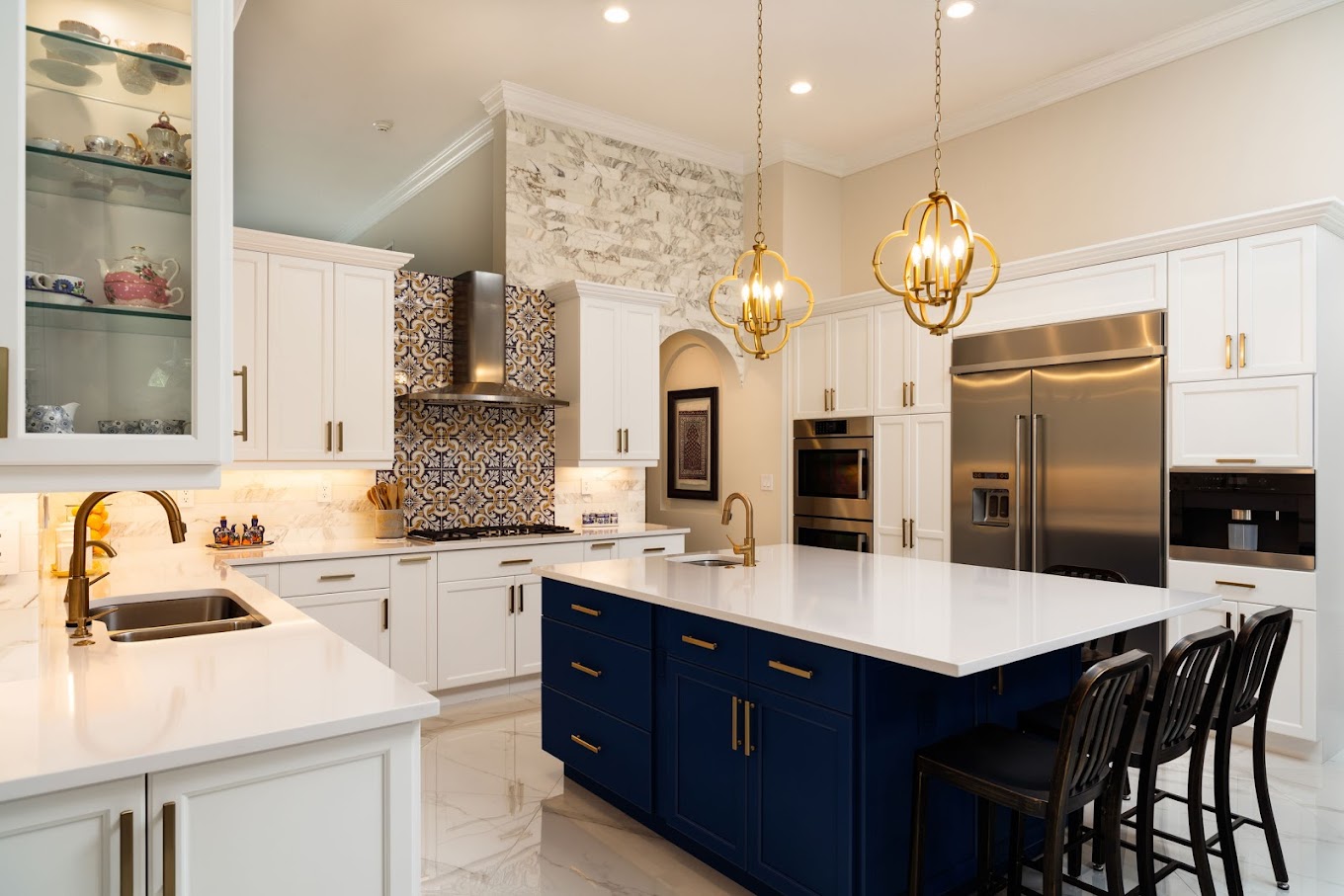

CabinetSet is a U.S. kitchen cabinet retailer serving homeowners, remodelers, contractors, and trade buyers through nationwide delivery, online ordering, and a Philadelphia-area showroom.

Furniture & Home

Google Ads Managment

Bing Ads Managment

Meta Ads Managment

YouTube Ads Managment

Conversion Rate Optimization

Analytics & Tracking

HubSpot Integration

Google Analytics 4

Google Tag Manager

Microsoft UET

Meta Conversions API

Offline Conversion Tracking

Looker Studio

HubSpot
The Results
+
980
%
+
585
%
-
72
%
Overview
From an under-segmented account to a Google Ads growth system
CabinetSet is a U.S. ecommerce retailer serving homeowners, remodelers, contractors, and trade buyers with ready-to-assemble and pre-assembled kitchen cabinets.
The business has multiple paths to a kitchen sale, but the commercial goal is the same – turn paid demand into more revenue and more sales activity. When Advantrise began work in 2023, Google Ads did not yet reflect the major differences between markets, product lines, buyer types, and delivery economics.
The account was rebuilt around commercial value rather than traffic volume alone. From the pre-rebuild baseline to the strongest sustained period, GA4-attributed revenue from Google Ads traffic increased 980%, commercial conversions increased 571%, and conversion cost declined 72%.
The Challenge
Scaling required more than sending additional traffic to the same account structure.
Cabinet sales are shaped by more than search volume. Purchasing power, delivery practicality, product preference, and buyer type can change the value of the same click from one market to another.
The account also contained many tracked website actions. Some were useful diagnostics, but they did not carry the same commercial weight as a customer entering the primary sales process. Optimizing toward all activity equally would make performance appear stronger without necessarily creating more business.
Demand quality varied by purchasing power, conversion potential, and the practical economics of delivery.
Cabinet categories and models did not deserve equal exposure or equal budget at every stage of growth.
Micro-events and spam could inflate activity unless campaigns were guided by stronger commercial outcomes.
Objectives
The real challenge: increase sales activity while making the account more selective about where budget competes and which actions guide optimization.
The Strategy
Manage paid demand by commercial value, not by traffic volume alone.
The strategic shift was to make market value, product potential, buyer intent, and sales feedback part of the account structure. Search, Shopping, and Performance Max could then play different roles while optimizing toward one commercial outcome.
This created a controlled path to scale. First, the account was rebuilt and the measurement baseline was clarified. Next, budget moved toward the combinations of location, product, and audience that showed stronger potential. Later, Meta added incremental demand and offline feedback improved the quality of the signals available to the advertising system.
growth system
Execution
Six connected workstreams turned the strategy into an operating system.
The result did not come from one campaign type or one bid change. It came from repeatedly narrowing where budget should compete, expanding the segments that produced stronger sales signals, and improving the data returned to the platforms.
Account Architecture
Search, Shopping, and Performance Max were reorganized so each could serve a clear role in demand capture, product discovery, and scale.
Market Segmentation
Campaigns were separated by purchasing power, conversion potential, and delivery practicality. Lower-priority or uneconomical locations were deprioritized.
Product Priority
Higher-potential cabinet lines and models received more exposure. Performance Max audience signals were refined around buyers most likely to enter the sales process.
Intent Control
A large and continuously expanded negative keyword library protected budget from weak, irrelevant, or commercially unsuitable search demand.
Buyer Segments
Homeowner demand and contractor demand received different campaign logic, allowing B2C and B2B acquisition to scale without forcing both audiences into one structure.
Signal Feedback
Conversion tracking was clarified and offline feedback was configured so stronger outcomes identified by CabinetSet’s sales managers could be returned to campaign learning. HubSpot supported spam control and value organization.
Meta was added later as a complementary source of assisted kitchen demand. It expanded the acquisition mix while Google Ads remained the main performance story.
Results
The peak represented a different level of Google Ads performance, not a small optimization gain.
The before-and-peak comparison uses Google Ads as the primary source for conversion volume and cost, with GA4 used for revenue attributed to Google Ads traffic. The commercial conversion measure consolidates the sales outcomes that matter to CabinetSet and excludes secondary micro-events.
The pre-rebuild monthly average is indexed to 100. Lower conversion cost is better.
1001 080
100671
10028
GA4-recorded social / cpc commercial demand increased 41% in September-December 2025 compared with the same four-month period in 2024. Meta spend remains confidential.
Business Impact
Google Ads moved from broad traffic acquisition to a substantially larger and more efficient sales channel.
The account generated far more paid revenue and commercial conversions while requiring only 28% of the original conversion cost. The improvement was not dependent on a proportional increase in traffic – average monthly paid sessions were lower in the peak period.
CabinetSet also gained a clearer operating framework for budget decisions. Markets, products, models, and buyer segments could be evaluated by their relative commercial value, while the sales team’s HubSpot qualification and offline feedback provided a stronger basis for future optimization.

Get a free growth strategy
Maximize ROI and Boost Sales with a Data-Driven Ads Strategy
Please fill in this short form and you will receive from us:
- Audit of advertising campaigns
- Strategy to increase sales and ROI
- Quick Account Setup